proof the play pdf
Understanding “Proof” ౼ The Play by David Auburn
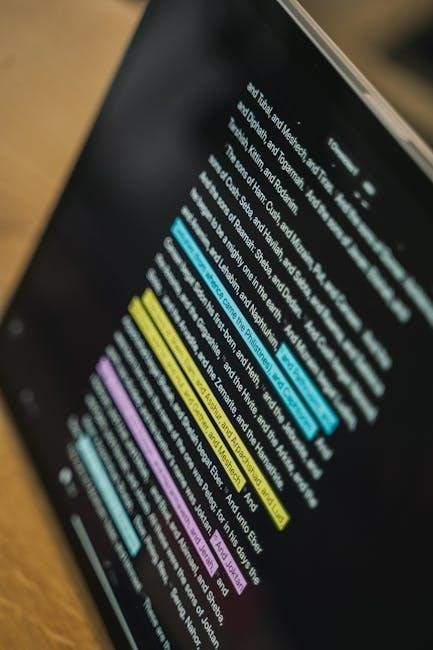
“Proof” scripts are readily available online through resources like the Internet Archive and Studocu, offering downloadable PDFs for study and analysis purposes․
Overview of the Play’s Premise
David Auburn’s “Proof” centers around Catherine, a young woman grappling with the recent death of her brilliant but mentally unstable father, Robert․ She’s also secretly battling her own potential hereditary mental illness․ The play unfolds in the aftermath of Robert’s passing, as Catherine cautiously navigates a complex emotional landscape while simultaneously confronting the possibility that she may have inherited his condition․
Adding to the intrigue, a potentially groundbreaking mathematical proof left unfinished by Robert surfaces, raising questions about its authorship – was it Robert’s final achievement, or has Catherine unknowingly completed it? The narrative explores themes of genius, madness, family, and the elusive nature of truth, all while questioning what constitutes valid “proof” both mathematically and personally․
Author Background: David Auburn
David Auburn, born in 1969, is an American playwright and screenwriter celebrated for his poignant and intellectually stimulating work․ He gained widespread recognition with “Proof,” which premiered on Broadway in 2000 and subsequently earned him the Pulitzer Prize for Drama and a Tony Award․ Auburn’s writing often delves into complex family dynamics, mental health, and the search for truth․
Prior to “Proof,” Auburn worked primarily as an actor and director․ His background in performance informs his dramatic writing, creating characters that are both deeply flawed and profoundly relatable․ He skillfully blends emotional depth with intellectual rigor, making his plays both critically acclaimed and popular with audiences․ Auburn continues to write for both stage and screen․

Characters in “Proof”
“Proof” features a compelling cast: Catherine, Robert, Hal, and Claire, whose intertwined relationships and individual struggles drive the play’s emotional core․
Catherine ‒ The Protagonist
Catherine is the central figure, a brilliant young woman grappling with a potential inherited predisposition to mental illness, mirroring her late father’s struggles․ She fiercely protects herself while simultaneously fearing the emergence of similar symptoms․ The play intricately explores her emotional turmoil and intellectual capabilities as she navigates grief and uncertainty․
Her character arc revolves around proving – ironically, given the play’s title – her own sanity and mathematical prowess․ She’s burdened by the responsibility of caring for her father, a renowned mathematician, and the suspicion surrounding the authorship of his final, potentially groundbreaking proof․ Finding a downloadable “Proof” script via resources like Studocu or the Internet Archive allows for a deeper understanding of Catherine’s complex motivations and internal conflicts․
Robert ౼ Catherine’s Father
Robert, a mathematical genius, is deceased at the play’s opening, yet his presence profoundly shapes the narrative․ He suffered from mental illness, a condition Catherine fears she may have inherited․ His final work, a potentially revolutionary mathematical proof, becomes the focal point of the drama, raising questions about its origin and authorship․
Robert’s legacy is complex, marked by both brilliance and instability․ Accessing a “Proof” script in PDF format – available through platforms like the Internet Archive and Studocu – reveals the nuances of his character as perceived through Catherine’s memories and the investigations of others․ The script illuminates his impact on his daughters and the lingering mystery surrounding his final achievement․
Hal ‒ The Graduate Student
Hal, a young and ambitious mathematics graduate student, enters Catherine’s life seeking to verify the validity of Robert’s final proof․ He becomes increasingly involved with Catherine, drawn to her intellect and the enigma surrounding her father’s work․ His investigation forms a crucial part of the play’s central conflict, questioning authorship and challenging perceptions of genius․
Studying the “Proof” script – easily found as a PDF on sites like Studocu and the Internet Archive – reveals Hal’s evolving relationship with Catherine and his dedication to unraveling the mathematical puzzle․ The script details his methodical approach and the ethical dilemmas he faces as he delves deeper into Robert’s legacy and Catherine’s past․
Claire ‒ Catherine’s Sister
Claire represents a contrasting life path to Catherine’s, having moved away from their family and built a seemingly conventional existence․ She returns home to manage practical affairs following their father’s death, often clashing with Catherine over their differing perspectives and coping mechanisms․ Her pragmatic nature provides a foil to Catherine’s volatile emotional state and intellectual intensity․
Accessing the “Proof” script in PDF format – available through resources like the Internet Archive and Studocu – highlights Claire’s role as a stabilizing force, yet also reveals her own anxieties and frustrations․ The script showcases her attempts to understand and help Catherine, while simultaneously protecting herself from the family’s complex history;

Plot Summary and Key Events
“Proof’s” narrative unfolds through a non-linear structure; accessing the script PDF via Internet Archive or Studocu reveals its intricate plot․
The Premise of Robert’s Mathematical Proof
Robert, a brilliant but mentally unstable mathematician, dedicates his life to finding a groundbreaking proof before succumbing to illness․ The central mystery revolves around whether he actually completed this significant work․ Obtaining a “Proof” script PDF – easily found on platforms like the Internet Archive and Studocu – allows a detailed examination of the complex mathematical ideas presented within the play․
The play doesn’t focus on the specifics of the proof itself, but rather on the question of its authorship and the impact of Robert’s genius and madness on his daughters, particularly Catherine․ Accessing the script provides crucial context for understanding the emotional weight tied to this elusive mathematical achievement and the family’s struggle to decipher its origins․
Catherine’s Struggle with Mental Illness
Catherine grapples with a hereditary predisposition to mental illness, mirroring her father Robert’s struggles․ A “Proof” script PDF, accessible via resources like Studocu and the Internet Archive, vividly portrays her anxieties and fears of succumbing to the same fate․ The play delicately explores how her condition impacts her ability to trust, form relationships, and even validate her own mathematical abilities․
The script reveals Catherine’s cautious approach to Hal, a graduate student investigating her father’s work, and her internal conflict regarding sharing the potential proof․ Studying the script allows a deeper understanding of the nuances of her illness and how it shapes her interactions and perceptions, adding layers to her character’s complexity․
Hal’s Discovery and Investigation
Hal, a bright and ambitious graduate student, stumbles upon Robert’s unfinished mathematical proof and begins an investigation, fueled by academic curiosity and a growing attraction to Catherine․ Accessing a “Proof” script PDF – available on platforms like the Internet Archive and Studocu – reveals his methodical approach to deciphering the complex work․
The script details his interactions with Catherine, as he seeks her assistance and attempts to determine the proof’s validity․ His investigation isn’t simply about mathematics; it’s intertwined with unraveling the family dynamics and Catherine’s personal struggles, making his journey a compelling element of the play’s narrative․
The Resolution of the Proof’s Authorship
The play culminates in a tense revelation regarding the authorship of the groundbreaking mathematical proof․ Examining a “Proof” script PDF – easily found on resources like Studocu and the Internet Archive – highlights the ambiguity surrounding whether Robert or Catherine deserves credit․
Hal’s investigation, meticulously detailed within the script, ultimately leads to the discovery of notes suggesting Catherine completed the work․ The resolution isn’t a simple declaration of authorship, but a nuanced exploration of genius, mental illness, and the complex legacy within the family, leaving the audience to ponder the true source of the breakthrough․
Themes Explored in “Proof”
“Proof” delves into genius, madness, family, and trust, themes accessible through readily available script PDFs on platforms like the Internet Archive․
Genius and Madness
“Proof” intricately explores the delicate and often blurred line between mathematical genius and mental instability, primarily through the characters of Robert and Catherine․ The play questions whether Robert’s brilliance was intrinsically linked to his descent into madness, and if Catherine inherited both․
Accessing a “Proof” script in PDF format – easily found on sites like the Internet Archive and Studocu – allows for a deeper examination of the dialogue and stage directions that illuminate this complex relationship․ Studying the text reveals how Auburn portrays Catherine’s fear of inheriting her father’s illness while simultaneously demonstrating her own exceptional mathematical abilities․ The availability of these resources enhances understanding of this central thematic tension within the play․
Family Dynamics and Relationships
“Proof” profoundly examines the intricate and often strained relationships within the family, particularly between Catherine, Robert, and Claire․ The play delves into the burdens of caregiving, the complexities of sibling rivalry, and the lingering effects of a parent’s illness․
Obtaining a “Proof” script as a PDF – readily available through platforms like the Internet Archive and Studocu – provides invaluable insight into the nuanced interactions between these characters․ Analyzing the dialogue reveals the unspoken resentments, the shared grief, and the tentative attempts at connection․ These readily accessible resources allow for a detailed study of how Auburn portrays the enduring power and fragility of family bonds, and the challenges of navigating them․
Trust and Betrayal
“Proof” masterfully explores themes of trust and betrayal, primarily through Catherine’s relationships with Hal and her sister, Claire․ The question of authorship of Robert’s proof fuels suspicion and doubt, forcing Catherine to confront her own vulnerabilities and question the motives of those around her․

Accessing the play’s script in PDF format – easily found on sites like the Internet Archive and Studocu – allows for a close examination of how Auburn builds tension and reveals layers of deception․ The script illuminates the subtle ways trust is eroded and rebuilt, and the devastating consequences of perceived betrayal․ Studying the text provides a deeper understanding of the characters’ internal conflicts and the play’s exploration of intellectual property and personal integrity․
The Nature of Proof and Truth
“Proof” intricately examines the elusive nature of both mathematical proof and emotional truth․ The central mystery surrounding Robert’s final work challenges the characters – and the audience – to consider what constitutes valid evidence and reliable knowledge․ Is a brilliant idea truly original, or merely a continuation of past thought?
Obtaining a PDF version of the script, readily available through resources like the Internet Archive and Studocu, facilitates a detailed analysis of Auburn’s nuanced portrayal of this theme․ The script reveals how characters grapple with uncertainty, subjective interpretations, and the difficulty of definitively proving anything, be it a theorem or a feeling․
Analyzing the Play’s Structure
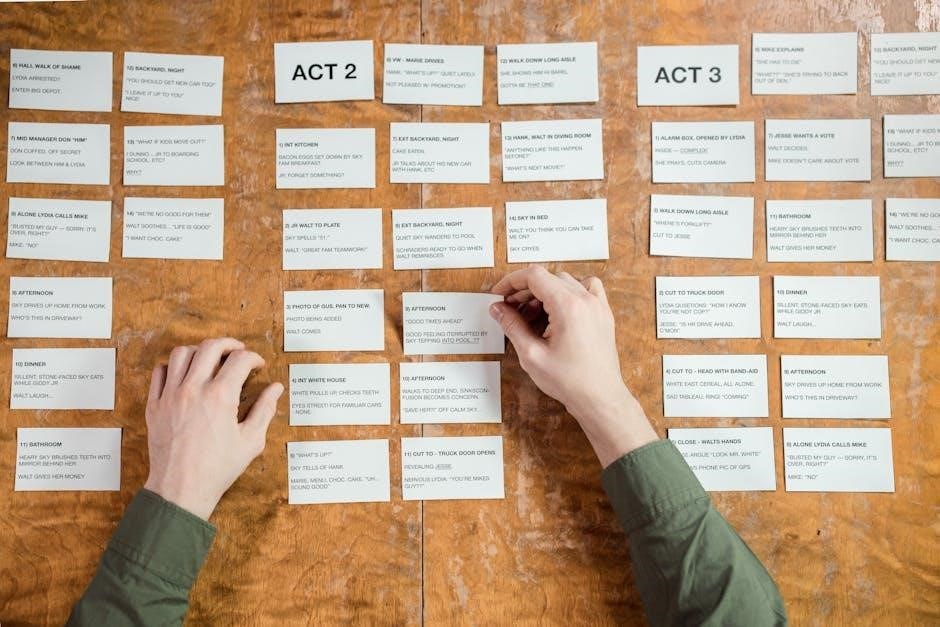
Studocu provides downloadable “Proof” scripts in PDF format, aiding structural analysis; understanding the non-linear timeline enhances comprehension of Auburn’s dramatic techniques․
The Use of Non-Linear Time
David Auburn masterfully employs a non-linear structure in “Proof,” seamlessly interweaving past and present moments․ Accessing a PDF version of the script – readily available through platforms like the Internet Archive and Studocu – is crucial for tracing these temporal shifts․
The play doesn’t unfold chronologically; instead, scenes jump between Catherine’s present struggles, memories of her father Robert, and glimpses into their shared past․ This technique mirrors the fragmented nature of memory and Catherine’s own fractured mental state․ Studying the script allows for detailed tracking of these transitions, revealing how Auburn builds suspense and gradually unveils the truth about Robert’s final work and Catherine’s inherited brilliance․ The PDF format facilitates close reading and annotation, essential for dissecting this complex narrative structure․
Dramatic Irony and Suspense
Auburn skillfully builds dramatic irony and suspense throughout “Proof,” leaving the audience questioning the authorship of the mathematical proof and Catherine’s mental stability․ A downloadable PDF script, found on sites like Studocu and the Internet Archive, is invaluable for analyzing these elements․
We, as the audience, often possess information that characters do not, creating tension as we anticipate the unfolding truth․ The play’s non-linear timeline further enhances this suspense, revealing clues gradually․ Access to the full script in PDF format allows for careful examination of dialogue and stage directions, highlighting moments where irony is employed and suspense is heightened․ This detailed analysis reveals Auburn’s masterful control of pacing and revelation․

“Proof” ‒ Script and PDF Availability
David Auburn’s “Proof” script is accessible online; Studocu and the Internet Archive offer downloadable PDF versions for convenient study and analysis․
Finding the Play Script Online
Locating a copy of David Auburn’s “Proof” script online is surprisingly straightforward, thanks to several digital resources dedicated to preserving and sharing dramatic works․ Studocu, a platform popular with students, hosts a “Proof Script for Class” document, offering a readily downloadable version often used for academic purposes and in-depth analysis․ This resource, uploaded in 2023, provides a convenient way to access the text․
Furthermore, the Internet Archive boasts a digitized copy of the play, allowing for free download, borrowing, and streaming․ This archive, with its record dating back to 2010, ensures long-term accessibility․ Both platforms provide valuable options for anyone seeking to engage with the script, whether for personal enjoyment, scholarly research, or theatrical production consideration․
Resources for Obtaining a PDF Version
Securing a PDF version of “Proof” by David Auburn is easily achievable through several online repositories․ Studocu presents a downloadable PDF labeled “Proof Script for class,” categorized as a practical report from the 2023/2024 academic year, making it ideal for students and enthusiasts alike․ This document, readily available, facilitates detailed script analysis and study․
Alternatively, the Internet Archive offers a comprehensive resource, providing a free-to-download, borrow, and stream PDF version of the play․ Its record, established in 2010, guarantees sustained access to the script․ These platforms offer convenient and legal avenues for obtaining the play in a digital, PDF format, supporting both academic and personal exploration of Auburn’s work․
Studocu Resources for “Proof” Script Analysis
Studocu provides a valuable resource for those seeking to analyze David Auburn’s “Proof,” offering a dedicated “Proof Script for class” document․ This PDF, uploaded for academic purposes, originates from coursework in the 2023/2024 academic year and is categorized as a practical report․ With over 740 views and saves, it demonstrates significant student engagement․
The document’s accessibility and clear labeling facilitate focused script study․ Students can utilize it for character analysis, thematic exploration, and understanding the play’s structure․ Studocu’s platform allows for easy download and review, making it an excellent tool for preparing for class discussions or independent research on “Proof;”
Internet Archive Availability of “Proof”
The Internet Archive hosts a digital copy of David Auburn’s “Proof,” offering free download, borrowing, and streaming options․ Identified by the OCLC record number 1036779921, the archived version provides access to the full play script in PDF format․ Its unique identifiers – urn:oclc:record:1036779921 and others – ensure precise location within the archive․
This resource, initially cataloged on July 1st, 2010, allows users to explore the text without cost or registration barriers․ The Internet Archive serves as a crucial repository for preserving and disseminating cultural works like “Proof,” making it readily available for scholarly and personal use․

Productions and Adaptations of “Proof”
“Proof” has seen successful runs on Broadway, at regional theaters like Sumter Little Theatre, and was adapted into a film starring Gwyneth Paltrow․
Original Broadway Production
David Auburn’s “Proof” premiered on Broadway in 2000 at the Walter Kerr Theatre, marking a significant moment in contemporary American theatre․ The production, directed by Daniel Sullivan, captivated audiences and critics alike, earning widespread acclaim for its intelligent script and compelling performances․
The original cast featured Mary-Louise Parker as Catherine, Neil Patrick Harris as Hal, Jennifer Jason Leigh as Claire, and John Goodman as Robert․ Parker’s portrayal of Catherine, a young woman grappling with her father’s legacy and her own mental health, was particularly lauded․ The play ran for over 900 performances, solidifying its place as a modern classic․ Finding a PDF of the script allows deeper exploration of this groundbreaking production’s nuances․
Sumter Little Theatre Production
The Sumter Little Theatre showcased a production of “Proof” in January 2024, demonstrating the play’s enduring appeal to regional theatre companies․ Playbills from this production are available online, offering a glimpse into a community theatre’s interpretation of David Auburn’s work․
While a full performance recording isn’t readily accessible, the availability of the playbill and the script itself – often found as a PDF online – allows enthusiasts to reconstruct and appreciate the staging choices made by the Sumter Little Theatre․ Accessing a PDF version of “Proof” enhances understanding of the play’s complexities, regardless of the production viewed․
Film Adaptation Starring Gwyneth Paltrow
The 2005 film adaptation of “Proof,” starring Gwyneth Paltrow, brought David Auburn’s story to a wider audience․ While the film isn’t a direct replacement for experiencing the play, it offers a visual interpretation of the narrative․ However, for detailed script analysis, accessing a PDF version of the original play remains invaluable․
Comparing the screenplay to the stage play’s PDF allows for a deeper understanding of the adaptations made for the screen․ Resources like the Internet Archive provide access to the play’s script, enabling viewers to appreciate the nuances lost or altered in the film version, enriching the overall experience․

Critical Reception and Awards
“Proof” garnered significant acclaim, including a Pulitzer Prize and Tony Awards; studying the play’s PDF reveals the brilliance critics celebrated․
Pulitzer Prize for Drama
David Auburn’s “Proof” was honored with the 2001 Pulitzer Prize for Drama, a testament to its compelling narrative and insightful exploration of complex themes․ Accessing a PDF version of the script allows for a deeper understanding of the play’s nuanced writing that resonated with the Pulitzer committee․
The award recognized Auburn’s skillful blending of mathematical rigor with emotional vulnerability, portraying a family grappling with genius, mental illness, and the search for truth․ Studying the play’s text, readily available online through resources like the Internet Archive, reveals the precise language and dramatic structure that contributed to its critical success and ultimately, its prestigious recognition․ The PDF format facilitates detailed analysis for students and theatre enthusiasts alike․
Tony Award Wins
“Proof” garnered significant recognition at the 2001 Tony Awards, securing two prestigious wins: Best Play and Best Featured Actress for Mary Steenburgen․ Obtaining a PDF copy of the script provides invaluable insight into the play’s construction and the performances that captivated audiences and critics alike․
The Tony Award for Best Play acknowledged Auburn’s masterful storytelling and the play’s profound exploration of family dynamics and intellectual pursuit․ Accessing the script online, through platforms like the Internet Archive, allows for a detailed examination of the dialogue and stage directions that contributed to the award-winning production․ Studying the PDF enhances appreciation for the play’s dramatic impact and artistic merit․
Symbolism in “Proof”
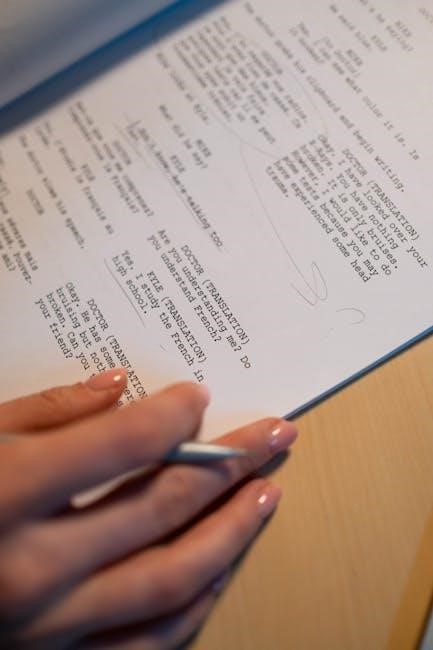
A downloadable PDF script of “Proof” reveals how symbols—like the garden—enhance thematic depth, enriching understanding of the play’s core ideas․
The Garden as a Symbol
The garden, a recurring motif in David Auburn’s “Proof,” functions as a potent symbol of both potential and decay, mirroring Catherine’s internal state and her father’s legacy․ Accessing a PDF version of the play script, readily available through platforms like the Internet Archive and Studocu, allows for a closer examination of stage directions and dialogue relating to the garden․
Initially neglected, the garden represents Catherine’s emotional stagnation and fear of following in her father’s footsteps․ As she begins to reclaim it, tending to the plants, it symbolizes her attempt to cultivate her own life and identity, separate from Robert’s shadow․ The garden’s flourishing, or lack thereof, directly correlates with Catherine’s progress in confronting her mental illness and establishing trust․ The script’s detailed descriptions, easily accessible in PDF format, highlight this symbolic evolution․
Mathematical Formulas and Equations
Mathematical formulas and equations aren’t merely props in “Proof”; they embody the play’s central themes of genius, madness, and the elusive nature of truth․ Obtaining a PDF copy of the script – easily found on sites like the Internet Archive and Studocu – reveals how Auburn integrates these elements into the dialogue and stage directions․
Robert’s proof, and the question of its authorship, drives the narrative․ The equations themselves represent the characters’ attempts to impose order on chaos, mirroring their personal struggles․ Catherine’s connection to her father’s work, and her own mathematical abilities, are explored through these symbols․ A detailed script PDF allows for careful analysis of how Auburn uses mathematical language to convey emotional and psychological states․